
Kids Nutrition in Australia
Kids Nutrition in Australia Helping children develop a love for vegetables is often one of the biggest challenges for Australian parents. With studies showing that only a small percentage of kids meet the recommended daily vegetable intake, this issue is becoming more important than ever. Proper nutrition during childhood supports healthy growth, strengthens immunity, and improves concentration, making it essential for long-term wellbeing. Parents are constantly searching for gentle, practical strategies that work without creating stress at mealtimes.
In 2025, the focus on children’s nutrition in Australia highlights the importance of making food fun, colourful and engaging. Instead of forcing kids to eat vegetables, families are encouraged to use creativity and consistency to build familiarity and acceptance. When children are exposed to vegetables in positive ways, from cooking together to tasting small portions, they gradually develop healthier eating habits that stay with them for life.
You Can Also Read: SASSA Application Status Check 2025
Quick Facts About Aussie Kids’ Vegetable Intake
Understanding the current nutrition situation helps parents see why these strategies matter. Most Australian children fall short of vegetable recommendations, yet vegetables are the core of a balanced diet that supports both physical and mental development. With small daily improvements, families can make a significant difference in their child’s overall health.
Some key points to know:
- Only around one in five Australian children eat enough vegetables each day
- Kids aged 4–12 need four to five daily servings of vegetables
- Positive exposure works better than pressure or punishment
- Small changes can build strong long-term eating habits
You Can Also Read: SASSA R2315 Disability Grant Boost
Make Veggies Visually Irresistible
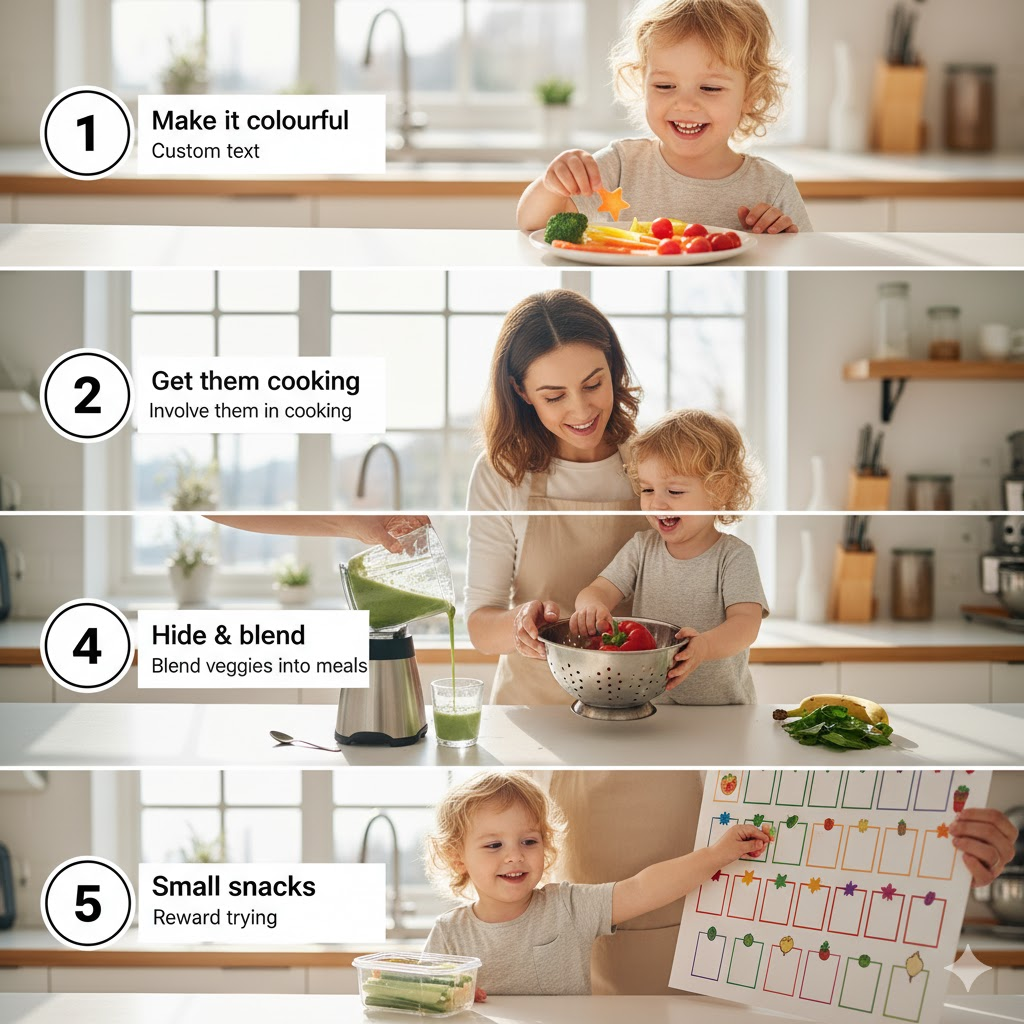
Children are naturally drawn to colourful, playful and appealing foods. When vegetables are presented in a fun way, the chances of kids trying them increase significantly. Visual appeal shapes a child’s first impression of food, and something as simple as a colourful plate can turn hesitation into interest. By transforming vegetables into exciting shapes or arranging them in creative patterns, parents can help their children view vegetables as something enjoyable rather than a chore.
Using cookie cutters to make carrot stars or cucumber hearts is a simple technique that often catches a child’s attention. Creating rainbow plates that include red, yellow, green and orange vegetables makes meals feel more exciting and encourages children to explore different colours and textures. Pairing vegetables with dips like yogurt or hummus also adds flavour and makes the experience more interactive.
Helpful presentation ideas:
- Use bright, colourful plates to make meals more inviting
- Arrange vegetables in creative shapes or simple food art
- Pair crunchy vegetables with smooth dips
- Mix multiple colours to create “rainbow” meals
Turn Cooking Into a Shared Adventure
Children are far more likely to eat foods they have helped prepare. When they get involved in the kitchen, they feel pride and ownership over the meal. This involvement also increases curiosity and makes vegetables feel more familiar. Cooking with parents is not just about preparing food; it is also a chance to build trust, teach essential life skills and create positive memories around mealtime.
Even young children can help with simple tasks such as washing vegetables, stirring sauces or placing toppings on dishes. These small responsibilities introduce them to different textures, smells and colours. Over time, children begin to associate vegetables with fun activities rather than pressure. When they see the process behind cooking, they become more open to tasting what they helped create.
Age-appropriate cooking tasks include:
- Washing vegetables and arranging them on a plate
- Stirring sauces or mixing ingredients
- Sprinkling cheese or herbs on top of meals
- Choosing which vegetables to add to dishes
You Can Also Read: Sassa Status Check Payment Dates
Blend Veggies Into Everyday Meals
Not all children are ready to accept visible vegetables straight away. When kids refuse vegetables based on their appearance alone, blending or grating them into familiar foods can be a helpful first step. This technique boosts nutritional value without changing the flavours children already enjoy. Over time, parents can gradually introduce small visible pieces to help children adapt to the taste and texture of vegetables.
Blended vegetables work well in smoothies, sauces, muffins and baked dishes. Carrots, zucchini, spinach and sweet potatoes are commonly used because they blend smoothly and add natural sweetness or moisture. This method allows children to receive essential vitamins and minerals without arguments or stress. Once children become more comfortable, parents can slowly reduce the hidden vegetable approach and introduce more visible portions.
Useful hidden-veggie ideas:
- Add grated zucchini or carrots to pasta sauces
- Blend spinach into smoothies with banana and yogurt
- Mix mashed sweet potato into muffins or pancakes
- Add pureed vegetables to soups and stews
You Can Also Read: SASSA Status Check SRD R370 Payment
Lead by Example The Family Approach
Children closely observe the behaviour of the adults around them, especially during mealtime. When parents eat vegetables regularly and enjoy them, children begin to see vegetables as a normal, enjoyable part of everyday eating. A positive family approach can make a stronger impact than any verbal encouragement. Children learn what they see, and modelling is one of the most effective ways to influence their habits.
Family meals also create a sense of connection and consistency. When everyone sits together to share the same food, children feel supported and included rather than singled out. Parents can also help by talking about the benefits of vegetables in simple, engaging ways. Instead of labelling foods as good or bad, they can focus on energy, strength and growth. Over time, this creates a healthy emotional relationship with food.
Helpful modelling tips:
- Eat vegetables in front of your child during meals
- Use positive language to explain the benefits of vegetables
- Avoid arguments or pressure during mealtimes
- Keep serving vegetables even if they are refused
Reward Effort, Not Finished Plates
Encouraging children to try vegetables should be based on gentle motivation rather than strict rules. Forcing children to finish their plates can lead to frustration and long-term resistance. Celebrating small efforts, such as taking a single bite, touching a new food or smelling a vegetable, builds confidence and reduces anxiety. This approach teaches children that trying new foods is a safe, positive experience.
Positive reinforcement can include simple praise, small rewards or a fun sticker chart. These methods help children associate vegetables with positive emotions instead of pressure. Research suggests that kids may need to taste a vegetable 10–15 times before accepting it, so patience plays an important role. Honouring small steps makes the learning process easier for both parents and children.
Motivation ideas:
- Use a sticker chart to track tasting efforts
- Offer praise when your child tries something new
- Create a “try one bite” habit without pressure
- Celebrate progress instead of perfection
Smart Veggie Swaps Aussie Families Can Use
Small substitutions can make everyday meals healthier without changing familiar flavours. These swaps increase nutrients while keeping meals enjoyable for kids. Parents can use these alternatives during snacks, lunchboxes or family dinners to gradually introduce more vegetables into a child’s diet.
Simple Vegetable Swaps for Healthier Meals
| Instead of | Try This | Benefit |
|---|---|---|
| Potato chips | Baked sweet potato fries | More fibre and vitamin A |
| White pasta | Wholegrain pasta with spinach sauce | Extra iron and B vitamins |
| Chicken nuggets | Homemade veggie–lentil nuggets | More protein and fibre |
| Sugary juice | Fresh fruit with cucumber water | Less sugar and better hydration |
| Ice cream | Frozen yogurt with berries | Calcium and antioxidants |
Veggies Beyond Dinner Snacks That Kids Love
Vegetables do not have to appear only at dinnertime. Offering them throughout the day helps build familiarity and reduces pressure. Snack-time vegetables are often easier for kids to accept because they come in small portions and can be paired with fun dips or flavours. This is especially helpful for children who become overwhelmed by large servings during meals.
Vegetable snacks can be crunchy, refreshing and easy to eat on the go. Parents can prepare snack platters that include two or three vegetable options so kids can choose what they prefer. Small choices help children feel more in control and more open to tasting different foods. Over time, these small exposures create positive habits.
Snack ideas that work well:
- Carrot sticks with hummus
- Cucumber slices with yogurt dip
- Baby corn or peas
- Cherry tomatoes with cheese cubes
Growing Curiosity Through Gardening and Sensory Play
Growing vegetables at home is an excellent way to help children feel connected to their food. When kids plant seeds, water plants and watch them grow, they develop pride and interest in the foods they helped produce. This process strengthens their curiosity and often leads them to taste the vegetables they grew themselves.
Even families living in apartments can grow herbs or small tomato plants on balconies or windowsills. Gardening introduces children to textures, smells and colours long before mealtime. It makes vegetables feel familiar rather than strange. Sensory play, like touching leaves or smelling herbs, also builds early trust and reduces fear of new foods.
Easy growing ideas:
- Cherry tomato pots
- Basil, mint and parsley plants
- Baby carrots or radishes
- Small herb jars near kitchen windows
When to Seek Advice Tips From Dietitians
Most picky eating is normal, especially during early childhood, but there are situations where professional support may help. If a child refuses almost all vegetables, shows signs of nutritional deficiency or becomes extremely anxious around new foods, parents can speak to a paediatric dietitian. These professionals offer personalised guidance and create practical meal plans based on the child’s needs.
Dietitians also support families dealing with allergies, sensory sensitivities or feeding difficulties. Early help prevents long-term problems and strengthens a child’s relationship with food. Parents should never feel alone in this journey; expert advice is available and effective.
7-Day Action Plan to Help Kids Love Veggies
A simple weekly plan can help families introduce new habits without stressing the child. By focusing on small steps each day, parents can build confidence and keep mealtimes calm.
Weekly goals include:
- Creating a colourful meal at the start of the week
- Letting kids help wash or prepare vegetables
- Blending vegetables into a favourite meal
- Introducing one new vegetable in very small portions
- Eating at least one family meal together
- Starting a simple gardening activity
- Celebrating effort using a sticker or praise chart
FAQs
1. How can I make vegetables more appealing for kids?
Use colourful plates, fun shapes and flavourful dips to make vegetables more interesting and enjoyable.
2. Should I blend vegetables into meals?
Yes, blending vegetables is a great starting point, especially for picky eaters. Over time, introduce small visible pieces to build acceptance.
3. How many vegetable servings do Australian kids need daily?
Children aged 4–12 typically require four to five servings of vegetables each day.
4. What if my child refuses all vegetables?
Continue offering tiny portions without pressure. Repeated exposure is the key to long-term acceptance.
Conclusion
Helping children enjoy vegetables is a slow, patient journey that relies on creativity, consistency and positive experiences. When vegetables become colourful, playful and part of everyday meals, children start seeing them in a more welcoming light. With strategies like involving kids in cooking, offering smart swaps, encouraging small tastes and modelling healthy eating, Australian families can build strong, lasting nutrition habits. Over time, even the fussiest eater can turn into a confident, curious and veggie-loving child