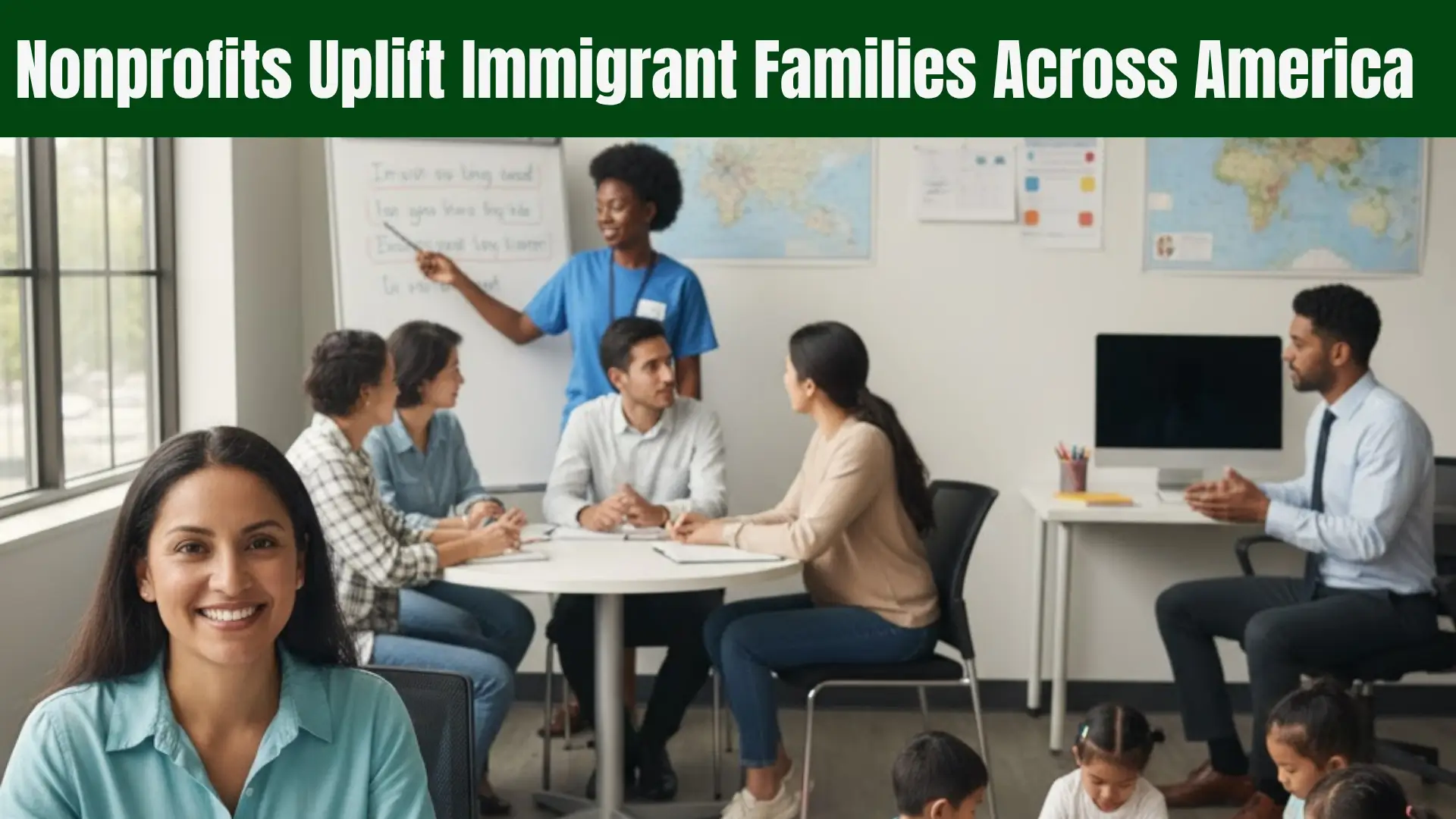
How Nonprofits Uplift Immigrant
How Nonprofits Uplift Immigrant Immigrant families across America often arrive with high hopes but face significant barriers as they begin their new lives. Many struggle with language differences, cultural adjustment, and navigating unfamiliar government systems. These challenges can make everyday tasks difficult, from applying for healthcare to enrolling children in school. Nonprofit organizations step in as an essential support system to help families overcome these obstacles. Through education, advocacy, and direct assistance, nonprofits empower immigrants to settle with confidence and stability. Their outreach efforts help newcomers understand how to live, work, and thrive in a new environment.
The role of nonprofits is not limited to immediate support; they also guide immigrants toward long-term success. These organizations help families understand their rights, access employment, and learn how to participate in community life. By connecting immigrant families with resources they may not know exist, nonprofits create a bridge between government services and everyday community needs. Their work strengthens the social and economic fabric of the United States by ensuring that all families, regardless of origin, have the tools to build a secure future.
You Can Also Read: SASSA Application Status Check 2025
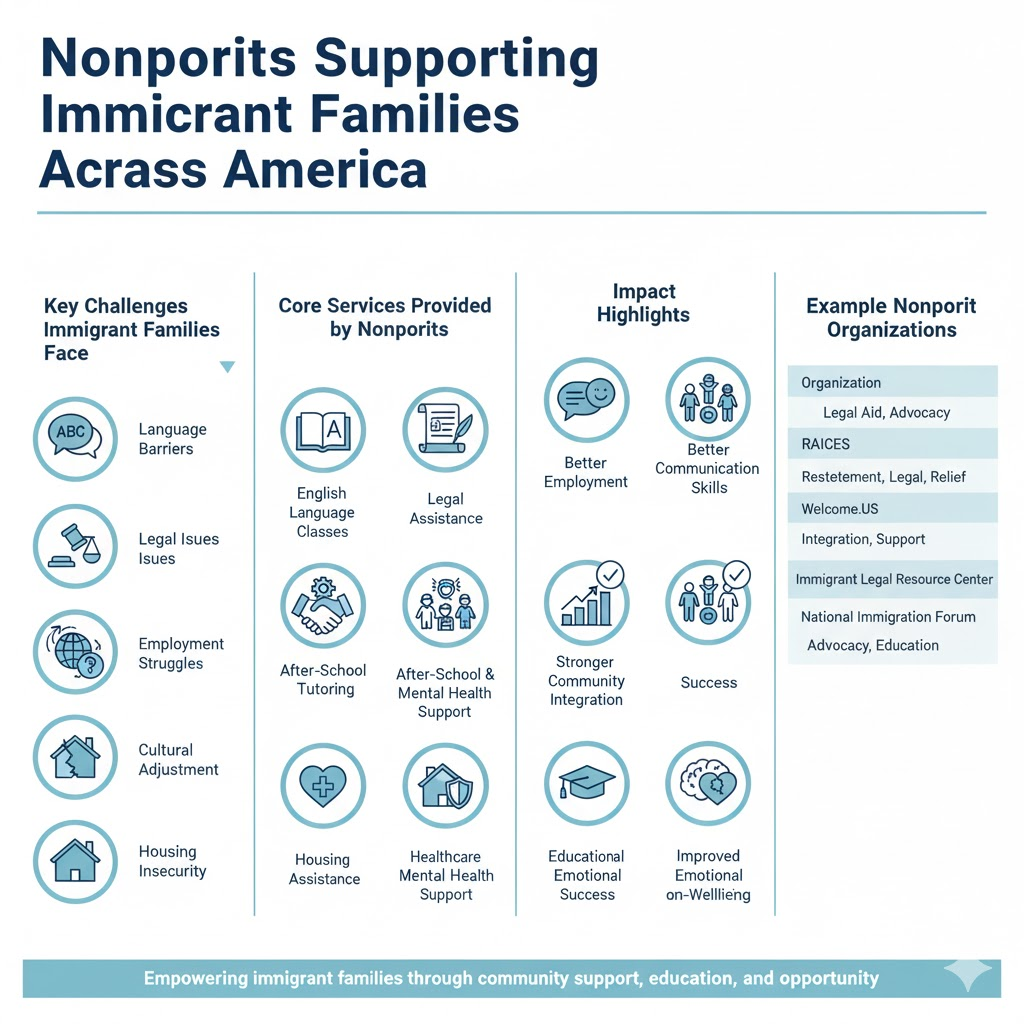
Some common challenges immigrant families face include:
- Language barriers that make communication difficult
- Limited knowledge of legal and community systems
- Difficulty accessing employment opportunities
- Housing insecurity and financial stress
- Cultural adjustment for both adults and children
How Nonprofits Support Immigrant Families in the United States
Nonprofits provide essential services that help immigrant families integrate smoothly into American society. One of the most impactful services is language education. Many organizations offer English language classes at flexible timings, making it easier for parents, workers, and students to attend. By learning English, immigrants gain the confidence to communicate in workplaces, schools, and neighborhoods. These classes also include cultural training to help families understand social norms, public services, and everyday communication styles in the United States.
In addition to language support, nonprofits partner with schools and educational institutions to assist children who may be adjusting slowly. They offer after-school tutoring, homework help, and parental guidance workshops. This not only supports children academically but also gives parents the tools they need to participate in their child’s education. For working adults, nonprofits offer job placement programs that help match skills with suitable employment opportunities. These programs teach individuals how to prepare resumes, attend interviews, and build professional confidence.
You Can Also Read: SASSA R2315 Disability Grant Boost
Nonprofits typically offer support such as:
- English learning programs
- Job training and skill-building courses
- After-school educational programs
- Community orientation and cultural workshops
- Legal counseling for immigration-related questions
Programs and Resources for Immigrant Communities Across America
Nonprofits across America run specialized programs created specifically for the needs of immigrant communities. One of the most important services is legal assistance, which helps individuals understand immigration processes, apply for visas, renew documentation, or seek asylum. Without this support, many families would struggle to navigate the legal system, potentially putting their safety or residency at risk. Nonprofits also provide financial education programs to help families understand banking, credit scores, budgeting, and financial planning. Such knowledge is essential for long-term stability and independence.
Healthcare access is another major focus, as many immigrants do not have insurance or do not know how to apply. Nonprofits connect families with low-cost clinics, vaccination programs, and mental health support services. Housing assistance programs help families find safe and affordable accommodation, while job fairs and mentorship networks open doors for career growth. These services allow families to gradually build a secure life, even if they arrive with limited financial resources.
You Can Also Read:
Below is a table summarizing notable nonprofits and the services they commonly provide:
| Nonprofit Organization | Main Services Offered | Location | Target Group |
|---|---|---|---|
| RAICES | Asylum support, legal defense | Texas | Refugees & immigrants |
| HIAS | Resettlement and job support | Nationwide | Refugees |
| Immigrant Legal Resource Center | Legal education & assistance | California | Immigrant families |
| Welcome.US | Housing & community sponsorship | Nationwide | Newcomers |
| National Immigration Forum | Policy advocacy & integration | Washington, D.C. | All immigrants |
Empowering Immigrant Families Through Community-Based Nonprofits
Community-based nonprofits play a crucial role in helping immigrant families achieve stability and independence. These organizations aim not just to support families but to empower them through skills, knowledge, and confidence. By offering leadership programs, youth development activities, and community-building events, nonprofits encourage immigrant families to participate fully in American society. These initiatives help families build relationships, understand their communities, and gain a sense of belonging in their new environment.
Many nonprofits also play an important role in advocating for policy reforms that affect immigrant families. They work closely with government agencies, community leaders, and legal experts to ensure fair treatment and equal opportunity. Through workshops, awareness campaigns, and community meetings, immigrants learn how to use their voices effectively. This empowerment strengthens the social fabric of local communities, creating an environment where diversity is valued and celebrated.
Some empowerment-focused services include:
- Leadership training for youth and adults
- Cultural exchange events and community celebrations
- Policy awareness and immigrant rights education
- Volunteer programs encouraging civic engagement
Real-Life Impact of Nonprofits on Immigrant Families in the USA
The positive impact of nonprofit organizations can be seen clearly in the success stories of countless immigrant families. Many families who arrived with uncertainty and minimal resources now lead successful, stable lives because of nonprofit support. Parents have secured steady jobs, children have excelled in school, and communities have grown stronger as immigrants become active and productive members of society. With continued guidance, immigrants learn how to achieve goals that once seemed unreachable.
Nonprofits also foster long-term stability by providing mentorship, business training, and career development opportunities. Some immigrants have gone on to start their own businesses, contributing to local economies and creating jobs for others. Others have pursued higher education, entered professional fields, and supported extended family members. These outcomes demonstrate how powerful nonprofit-driven support can be when combined with hard work and community commitment. Through compassion and structured assistance, nonprofits transform challenges into opportunities for growth.
Common results seen in communities include:
- Improved language and communication skills
- Stronger financial independence for families
- Higher education success for children
- Increased community engagement
- Strong social support networks
FAQs
1. What are some well-known nonprofits helping immigrants in the USA?
RAICES, HIAS, Welcome.US, and the National Immigration Forum are among the most trusted organizations helping immigrant families.
2. How do nonprofits help immigrants adjust to life in the United States?
They offer language classes, legal help, job training, housing support, and community orientation programs.
3. Do nonprofits receive government funding for these programs?
Some receive partial funding, while many rely on donations, grants, and private sponsors.
4. How can people support nonprofits working for immigrants?
Support can be provided through volunteering, donating, spreading awareness, and joining community outreach programs.